The promise of remote-first engineering was geographic equality: hiring the sharpest minds regardless of postal code. But while tools like Git and Jira are borderless, workplace discourse often remains tethered to a rigid linguistic requirement.
The Hidden Tax of Non-Native Communication
Engineers and designers in Tokyo, Berlin, or São Paulo spend up to 25% of their daily cognitive energy phrasing tickets, bug reports, and architectural reviews in second or third languages.
“When people must draft their thoughts through a linguistic filter, the most precise technical insights are often simplified or withheld altogether.”
This isn't merely an emotional concern; it directly impacts software architecture and product quality. A backend specialist might spot a subtle concurrency flaw, but hesitate to write a multi-paragraph objection because phrasing it in English takes thirty minutes of self-conscious editing.
Fan-Out Group Channels: The Lingually Model
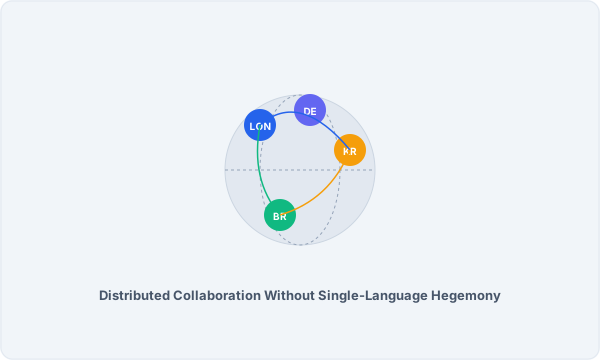
Rather than forcing team members into a single shared compromise tongue, Lingually's group channel fan-out architecture routes each message through an edge translation pipeline customized to the recipient:
- Author writes in German: Greta writes detailed technical architecture in German without pausing for English idioms.
- Teammate reads in Spanish: Mateo receives the message in clean Spanish, with German technical terms preserved and highlighted.
- Lead reads in English: Elena reviews the pull request comments in English, retaining full semantic precision.
Building Cultural Safety and Organic Literacy
When distributed teams are given the freedom to communicate naturally, psychological safety skyrockets. Team members no longer feel self-conscious about occasional typos or grammatical quirks.
Over time, team members organically absorb key phrases and technical vocabulary from their peers' languages, turning routine team standups into a shared cultural asset.